
twitter
    Find out what I'm doing, Follow Me :)

Tuesday, January 31, 2012

How To Deal With Insider Threats?


The biggest threats to IT security don’t originate from outside a company. Employees, contractors, and business partners on the inside pose a far greater security risk. As long as your current or former staff and associates have access to your internal network, you are vulnerable to a security breach.

Here’s how to deal with the real and significant threat of attack from insiders, and avoid the widespread damage they can unleash on your company’s finances and reputation.

First: Assess the Risk

For most firms, implementing full protection against every possible threat is not feasible. It makes more sense to assess the risk, determining which data is critical and which is relatively unimportant. Protect critical resources first.

Next, decide who needs access to the network. Make sure that individuals such as partners, suppliers and contractors have access only to the information they need to serve your company or customers.

The third step in assessing risk is determining who are the potential threats, why they would want access to the network, and how they could gain entry. At this stage, many organizations only consider external threats: competitors, random hackers or former employees. Don’t neglect analyzing your insider threats, as well – including the staffers tasked with protecting the system.

Once you’ve uncovered vulnerabilities, you can take steps to prevent an insider attack.

Implement Preventative Measures

Among the best practices for preventing insider threats are:
  • Institute clear policies and controls; be sure all employees are aware of acceptable network use and what constitutes a breach.
  • Enforce policies consistently; maintain proper paper trails.
  • Implement security awareness training; reinforce its importance.
  • Segregate duties to reduce risk.
  • Encourage employees to come forward and identify suspicious behavior, malicious insiders, threats against the company or attempts at exploitation.
  • Implement proper system administration safeguards on critical servers.
  • Monitor trusted users.
  • Audit access to customer information.
In addition, you’ll want all the usual technical protection against spyware, malware and viruses, firewalls, and regular security patches. Consider securing the physical space as well, with entry and exit controls and badges to monitor employees, delivery people and visitors. You want to hire security personnel to discourage criminal activity.

Finally, Know Whom You’re Hiring

Failing to thoroughly check out a potential hire leaves a company vulnerable to insider threats. It goes without saying that thorough background checks are necessary for any prospective new employee who will have access to sensitive information, from customer credit card numbers to crucial application source codes. But for better protection, extend that practice to all employees and contractors.

Background checks should include a criminal history report, a credentials check and a credit check. Hiring managers should verify past employment and speak to former employers regarding the applicant’s history of dealing with workplace issues. Any information gathered should be part of the decision-making process.

Monitor Employee Behavior

Once an employee is hired, be sure supervisors are tasked with reporting any strange or inappropriate behavior. Compare such incidents to systems logs to determine if anything unusual is happening. And remember to enforce all security policies. If employees learn they can get away with small violations, they may be emboldened to move on to bigger and more lucrative security breaches.

Be Aware and Vigilant When Dealing With Insider Threats

Whether they modify data, steal critical codes, sell company secrets or commit payroll fraud, insiders are the biggest security threats a company will face. While there is always an element of risk, you can decrease information system vulnerability with these common sense steps. Most importantly, by being aware and vigilant, you’ll be better prepared to avoid the losses that far too many organizations suffer at the hands of trusted insiders.

As more companies move more of their businesses online we should expect to see more threats. Formal IT security training can help defend against these threats. Consider Villanova University’s online programs such as their CISSP certification prep courses

How to easily add your app to your page on Facebook

You must be familiar with beautiful landing pages on Facebook. A lot of companies these days have set a default landing page for their Facebook like page that looks beautiful and in most of the cases, very interactive too. You can also create a Facebook landing page by creating a HTML page on a directory within a website and then embed it to a canvas on Facebook. You can then add the canvas to a fan page on Facebook where it appears as a separate tab. If you are a Facebook developer, you must have noticed that recently, the option for adding a canvas to a page on Facebook has disappeared. But don’t worry, there’s a neat little trick for adding a canvas to any Facebook page, even if the option for adding it is missing on the interface.
 

The option previously used to appear on the Canvas Settings page for an app. You could then add it to any of the pages you admin by going to View App profile page and then to “Add to my page”. But now, the option is completely missing. However, you can do it with a direct link

http://www.facebook.com/add.php?api_key=[your-app-ID]&pages=1

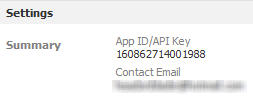
Facebook add app to pageYou can find your API key by opening the app settings from Facebook developers page. Replace the your-app-ID above with the app ID you just copied and follow the link. You will see options for adding the app or the canvas to your pages.

This enables you to add any app to a page you admin, even if the option isn’t available in the Facebook Developers section.

Monday, January 30, 2012

How Web giants store big - and we mean big - data


http://static.arstechnica.net/assets/2012/01/google-hdd-techs-4f1647b-intro-thum
Credit: Arstechnica
Consider the tech it takes to back the search box on Google's home page: behind the algorithms, the cached search terms, and the other features that spring to life as you type in a query sits a data store that essentially contains a full-text snapshot of most of the Web. While you and thousands of other people are simultaneously submitting searches, that snapshot is constantly being updated with a firehose of changes. At the same time, the data is being processed by thousands of individual server processes, each doing everything from figuring out which contextual ads you will be served to determining in what order to cough up search results.
The storage system backing Google's search engine has to be able to serve millions of data reads and writes daily from thousands of individual processes running on thousands of servers, can almost never be down for a backup or maintenance, and has to perpetually grow to accommodate the ever-expanding number of pages added by Google's Web-crawling robots. In total, Google processes over 20 petabytes of data per day.
That's not something that Google could pull off with an off-the-shelf storage architecture. And the same goes for other Web and cloud computing giants running hyper-scale data centers, such as Amazon and Facebook. While most data centers have addressed scaling up storage by adding more disk capacity on a storage area network, more storage servers, and often more database servers, these approaches fail to scale because of performance constraints in a cloud environment. In the cloud, there can be potentially thousands of active users of data at any moment, and the data being read and written at any given moment reaches into the thousands of terabytes.


Malicious MIDI files lead to rootkit malware


http://www.flickr.com/photos/collinmel/4174747024/
A Windows Media remote code execution flaw that has been patched in the last Patch Tuesday is being exploited by attackers in the wild to deliver malware to the targets' computer, warns Trend Micro.
The victims are lured to a malicious web page (http://images.{BLOCKED}p.com/mp.html), which hosts a specially crafted MIDI file and JavaScript.

The page's HTML file calls upon the MIDI file to trigger the exploit, and the JavaScript decodes shellcode that is already embedded in the HTML file. Upon execution, the shellcode downloads an encrypted binary from another site.

Sunday, January 29, 2012

iPhone 5 release details "leaked"


http://cdn.mos.techradar.com/classifications/Mobile%20Phones/iPhone/iPhone%204S/
Credit: Tech Radar
An employee for Foxconn in China has reportedly stated production of a device dubbed the iPhone 5 is about to go into production.

The source also revealed to 9to5Mac there are several sample handsets doing the rounds, but all differ slightly from each other. It is not clear which, if any, is the final device.

Some similarities between all the samples have been noted, including a screen which is 4-inches (or larger) in size, a different form-factor – hinting that Apple is going to move away from the 4/4S design and the devices are longer and wider than previous iPhones.

Computer Coding: Not for Geeks Only

http://images.businessweek.com/cms/2012-01-26/tech_coding05__01__600.jpg
The Web-based backlash against the Stop Online Piracy Act, a bill aimed at taking down overseas distributors of copyrighted movies and music, was much like the Internet itself: decentralized, anarchic, and powerful enough to help persuade Senate Majority Leader Harry Reid (D-Nev.) to shelve the bill on Jan. 20. There was no official slogan for the public pushback against perceived government meddling with the Web, but the unofficial one might have been a headline that appeared on the online magazine Motherboard: “Dear Congress, it’s no longer ok to not know how the Internet works.”

A growing number of people agree that not only should Congress understand how software is made, so should everyone. Designers, economists, doctors, and others with no direct connection to the technology world are embracing coding as a way to advance their careers, automate boring tasks, or just a means of self-improvement, a hobby like learning Spanish or doing crossword puzzles. And they have access to an expanding universe of free online coding tutorials from startups and universities such as Stanford and Massachusetts Institute of Technology. Programming is becoming “a much more fundamental piece of knowledge, similar to reading or writing,” says Andy Weissman, a partner at New York’s Union Square Venures, which led a $2.5 million investment round for Codecademy, a site that teaches people basic programming skills.

Monday, January 23, 2012

HOW TO USE COLORFUL EMOTICONS FOR FACEBOOK CHAT

Today I’m going to discuss cool and sweet looking chat tweak which you can use to attract the receiver and force him to reply to you so this is known as Colorful Alphabets Emoticons in my language you can call it anything which fits you well the preview is below I just wrote Techruin  in my friends chat window and you can write anything combining codes below.
Now as you can see how beautiful it looks when you will this kind of message to your friends. So now if you like this thing and you wanna start a colorful alphabets emoticon chatting than you wanna use below code for different alphabets mentioned. So whenever you paste code for any alphabet and you hit enter you will get colorful alphabets like above. So copy codes from below and start chatting and enjoy chatting.

 
[[107015582669715]] = A                                
[[116067591741123]] = B
[[115602405121532]] = C
[[112542438763744]] = D
[[115430438474268]] = E
[[109225112442557]] = F
[[111532845537326]] = G
[[111356865552629]] = H
[[109294689102123]] = I
[[126362660720793]] = J
[[116651741681944]] = K
[[115807951764667]] = L
[[106596672714242]] = M
[[108634132504932]] = N [[116564658357124]] = O
[[111669128857397]] = P
[[107061805996548]] = Q
[[106699962703083]] = R
[[115927268419031]] = S
[[112669162092780]] = T
[[108983579135532]] = U
[[107023745999320]] = V
[[106678406038354]] = W
[[116740548336581]] = X
[[112416755444217]] = Y
[[165724910215]]      = Z

Saturday, January 21, 2012

Fix the Package System is Broken error in Ubuntu 10.04/10.10 Maverick Meerkat


This brief tutorial will show you how to fix ‘The package system is broken’ error in Ubuntu Lucid or Maverick. Sometimes when you’re installing programs in Ubuntu and all dependencies are not installed, your package system would get corrupted and you won’t be able install new programs or packages. This will help you fix that.

Getting started:

Below is the image of the error you’ll get when your package system is broken.

broken_package_mav

To fix it, go to System –> Administration –> Synaptic Package Manager.

broken_package_mav-1

Then select ‘Custom Filters’ on the left menu.

broken_package_mav-2

Next select ‘Broken’ on the left and you’ll then notice package(s) with the red exclamation marks.

broken_package_mav-3

Right-click each package and select ‘Mark for Complete Removal’.

broken_package_mav-4

Then click ‘Apply’ to apply the change. When prompted again, click ‘Apply’ to remove them.

broken_package_mav-5

Enjoy!

broken_package_mav-6

Thanks for reading and please come back soon.

Friday, January 20, 2012

Facebook chat phishing attack impersonates Facebook security team


http://www.flickr.com/photos/johnhaydon/5904883838/

A new phishing attack that's spreading through Facebook chat modifies hijacked accounts in order to impersonate the social network's security team.

The attackers replace the profile picture of compromised accounts with the Facebook logo and change their names to a variation of "Facebook Security" written with special Unicode characters, said Kaspersky Lab expert David Jacoby in a blog post.

Facebook claims that changing the profile name can take up to 24 hours and is subject to confirmation. However, in Jacoby's tests the change occurred almost instantly and required only the password. This was also confirmed by a victim whose profile name was modified within 5 minutes of their account being compromised, he said.

Monday, January 2, 2012

How To Find Vulnerabilities in PHP Applications - PHP Vulnerability Hunter


PHP Vulnerability Hunter is an advanced automated whitebox fuzz testing tool that can elicit a wide range of exploitable faults in PHP web applications. Since most of the webapplications now a days are on PHP, therefore PHP applications have been one of the major target of hackers, PHP Vulnerability scanner is the same tool that helped detect most of the web application vulnerabilities listed on the advisories page.


Like all the best tools in the world, this also needs little or no configuration at all, and doesn't require a user specified starting URI. So, you can begin scanning as soon as you download and install this software.

The tool itself runs on a pretty basic mechanism. At the core of the PHP Vulnerability Hunter scan algorithm is dynamic program analysis. It analyzes the program as it’s running to get a clear view of all input vectors ergo better code coverage leading to greater confidence in code security.


This new version brings to us many improvements such as:
  • Added code coverage report
  • Updated GUI validation
  • Several instrumentation fixes
  • Fixed lingering connection issue
  • Fixed GUI and report viewer crashes related to working directory
And its key features include:
  • Automated input vector discovery
  • Integrate fault detection
  • Minimal configuration
  • Proven effective.
Download PHP Vulnerability v1.1.4.6